
Polish astronomer-astrologer
Nicolaus Copernicus (1473-1543) was the first to
postulate the revolutionary cosmological concept of
heliocentrism that put the
sun at the centre of the universe, with the earth revolving
around the sun while
also rotating daily around its polar axis. Nicolaus was a
physician and served as a canon in the Roman Catholic
Church.
I came across a video of a young
pastor evangelising at one of
downtown
Toronto’s street corners. As I viewed his
‘died-for-your-sins’ stand-up, which turned to
attacking
horoscopes, astrology and such, I was amazed as to the level of
ignorance that
stubbornly prevails, even in this age of high speed internet,
where knowledge
is usually only a few clicks away.
...in the expanse of the sky
"And God said, "Let there be lights in the expanse of the
sky to
separate the day from the night, and let them serve as signs to mark
seasons and
days and years, and let them be lights in the expanse of the sky to
give light
on the Earth." And it was so." (Gen. 1:14-15). This
explicit
astrological reference in the Old Testament is generally
acknowledged as an
exhortation to read the skies in order to mark the passage of time
and delineate
the seasons.
The Book of Ecclesiastes whose authorship is traditionally
attributed to King
Solomon could not have been more plain in describing the overarching
influences
of astrology over human life and humanity: "There is a time for
everything,
and a season for every activity under heaven: a time to be born and
a time to
die, a time to plant and a time to uproot, a time to kill and a time
to heal, a
time to tear down and a time to build, a time to weep and a time to
laugh, a
time to mourn and a time to dance, a time to scatter stones and a
time to gather
them, a time to embrace and a time to refrain, a time to search and
a time to
give up, a time to keep and a time to throw away, a time to tear and
a time to
mend, a time to be silent and a time to speak, a time to love and a
time to
hate, a time for war and a time for peace." (Eccl. 3:1-8)
As with the old so with the new…
The New Testament (Gospel of Matthew) narrates how the three
Chaldean wise men
learned about the birth of the infant Jesus and set out to track
down the new
born King of the Jews, upon whom to shower
gold, frankincense,
and
myrrh. The magi are believed to have been very skillful
Persian
astrologer-kings who using their only real source of information,
the movement
of the planets and stars traversing the vast expanse of Eastern
skies, were able
to not just pinpoint the time of birth but to accurately calculate
Jesus’
birth place as they set out to locate him in the little town of
Bethlehem. Thus,
rather than literally following “the star” this is an
actual
reference to the magi’s application of astrological knowledge
in observing
the constellations and celestial bodies so as to extrapolate their
significance
to earthly events taking shape.
Evidently, it does not take a Bible scholar to observe that the
Bible is full of
astrological references - all that is required is the ability to
read and
understand the written word and some very rudimentary knowledge of
astrology.
Christians who blindly believe that astrology is evil or satanic or
is somehow
mixed up with the
occult simply because the
“Church” or the
Bible says so, need to take a good hard look at the Good Book. It
may surprise
them to learn that of the numerous astrological references some of
the choicest
are attributed to no less a luminary than Jesus Christ himself,
indeed revealing
his deft proficiency in astrology, as in the verse where Jesus
reveals the
"signs" of his coming: "And there shall be signs in
the sun, and
in the moon, and in the stars; and upon the Earth distress of
nations, with
perplexity; the sea and the waves roaring; Men's hearts failing them
for fear,
and for looking after those things which are coming on the Earth:
for the powers
of heaven shall be shaken. And then shall they see the Son of man
coming in a
cloud with power and great glory." (Luke 21:25-27)
That astrology was widely accepted and openly practised in Biblical
times is
historical fact. Indeed the Biblical references to astrology are so
numerous as
to merit at least an entire section later in this article.
(The Age of Pisces
is dominated by
fish symbology and the fish sign carries special significance
having been
the recognised sign of Christianity.)
History and Historical Fate of Astrology
Man’s fascination with the skies, and hence the birth of
astrology
predates written history and certainly predates the Christian era by
many
thousands of years. Although no one quite knows exactly how or when
the practice
of astrology got its start, evidence of it is to be found across the
globe with
archeologists having uncovered artifacts from as early as 15,000 BC
that show
that our Mesolithic ancestors were well aware of the lunar phases
which they
carved out in bone!
While star charts have been discovered in Egypt going as far back as
4200 BCE
history credits the earliest advances in developing a sophisticated
astrological
system to the Babylonians (2350 BCE) who are also believed to have
originated
the Signs of the tropical Zodiac (western). The exploits of
Alexander the Great
created the conditions (post 323 BCE) for these ancient systems to
merge with
the Greek astro tradition and culture which spread throughout
Mesopotamia and
the Roman Empire. As well, other ancient forms of astrology had made
their
appearance among some major Eastern cultures more or less
simultaneously,
including in India, Tibet and China. The sophisticated Mayan and the
Aztec
astronomical-astrological systems came to us through another
parallel though
unconnected track in Central and South America.
A fundamental principle that is universally accepted in astrology
regards the
individual, the Earth, and its environment as one single organism
seamlessly
integrated within the cosmos, wherein every part of the whole is
correlated with
every other part. Hence the belief that cycles of change and
evolution observed
in the cosmos are the reflection, rather than the cause of similar
evolutionary
cycles of change unfolding on earth and within the individual. This
relationship
and the symmetry between the individual - the microcosm, and the
universe - the
macrocosm, are succinctly summed up in the Hermetic expression
"as above,
so below; as below, so above".
Modern Western astrology which has its roots in Ptolemaic,
Hellenistic and
Babylonian traditions is broadly speaking, a system of divination
based on
constructing the horoscope for the precise moment, of a person's
birth, for
instance, and determining the impact of the influences that various
celestial
bodies are believed to exert. The relative positions of the Sun,
Moon and
planets are analysed by their movement through signs of the zodiac
(spatial
divisions of the ecliptic) and by their aspects (angles) relative to
one
another, as well as by their placement in houses (spatial divisions
of the sky).
Western astrology as reduced to the tabloid variety “sun sign
astrology”, only looks at an individual's date of birth
(‘position
of the Sun’ on that date), lumping everyone born on a certain
date
together.
In contrast, the origins of Indian Vedic astrology (
Jyotish
in
Sanskrit) can be traced back at least four thousand years, with the
first
references to astrology contained in the ancient comprehensive texts
of the
Vedas (hence the name Vedic astrology), which has ensured
the creation
of a robust body of practices and techniques to support a highly
precise
predictive astrological system.
Through the long passage of history astrology has encountered
varying degrees of
acceptance and popularity both among the ruling classes as well as
the general
population. Initially, astrology’s main purpose was for
so-called Mundane
or Political astrology with many of the astrologers/astronomers
being attached
to royal courts, and therefore expected to apply their craft towards
securing
the interest and welfare of the rulers, the kingdom, and managing
local
conditions or events. The notion of casting natal charts for common
individuals
did not gain currency until about 300 CE; the ensuing 1500 years
swept astrology
along over alternating currents of waxing and waning
popularity.
The publication in 140 CE of the first major authoritative
manuscript on
astrology, by Greek astrologer-astronomer Ptolemy of Alexandria,
made astrology
accessible to many more people in Europe where it had gained a
strong following
in the Catholic Church by 410 CE. Its eventual fall from grace was
brought about
largely by St. Augustine’s scathing arguments against
it.
From as far back as the 10th century CE through to the 18th century
including
during the Enlightenment, astrology and Christianity coexisted
throughout
Europe, sharing the status of being the predominant philosophies of
the time.
During the 10th century Greek astrology made inroads into Britain
along with the
introduction of the Latin translated works of the Greek philosophers
(Boethius,
Averroes, Plato, Aristotle, Herodotus); with learning being under
the
Church’s purview during the Medieval period, Britain’s
monasteries
represented the primary source of education for young boys at the
time. The
country thus produced many priests who studied and practised
astrology, for good
reason, including academic necessity. Essentially, preparing for the
priesthood
by working towards a theology degree at university required the
study of the
seven liberal arts that were divided into two components, the
trivium and the
quadrivium, wherein one of the subjects was astronomy, often called
astrology
which covered both branches. Moreover, while the study of astronomy
necessarily
included the study of astrology, studying philosophy included
medical
astrology.
Indeed it is acknowledged fact that modern medicine has its roots in
medical
astrology, developed as an ancient medical system that associated
various parts
of the body, diseases and medicines with the Sun, Moon, planets, and
the twelve
astrological signs and therefore characterised as being prone to
their
influences. The father of medicine, Greek physician Hippocrates,
required his
students to study astrology, saying, "He who does not
understand astrology
is not a doctor but a fool". Similarly, based on the planetary
influences
on many herbal plants a codification system of plant properties was
developed
and used in the preparation of specific medicinal mixtures to treat
various
diseases.
St. Augustine, an early Catholic theologian who had been a student
and proponent
of astrology in his youth, eventually denounced it in his
Civitate Dei
(City of God), evidently because of his inability to come to terms
with various
phenomena that appeared inconsistent with his understanding of the
underlying
astrological significations. For example, he couldn’t
reconcile how twins
who were conceived at the same moment and shared roughly the same
birth time
could end up leading very different lives; or, that a large number
of people
with widely differing dates and times of birth who should therefore
have had
very different horoscopes could all share the same fate, dying
together in the
same battlefield on the same day. Coming at a time of decreasing
literacy in the
Europe of the Middle Ages, his arguments were enough to sway the
Church into
condemning astrology in the 3rd-4th century, thereby leading to its
overall
decline in Europe and generally in the West, a state to which it
remained
relegated for approximately an entire millennium.
Gospel Truth… or Fiction:
Bible Misinterpretations, Contradictions
The astrological references incorporated throughout the text of the
Bible are
far too numerous (Revelation is filled with Astrological symbolism)
for the
argument that the Bible forbids astrology to stand up to serious
challenge. On
the contrary, the text clearly indicates that astrology was very
much an
accepted and prominent part of life for the ancient
Israelites.
As proof of the Bible proscribing astrology, naysayers tend to quote
misinterpreted verses like Isaiah 47:13-15 which appear to mention
certain
approaches to astrology/astrological practices. However the apt
interpretation
of the intent of these verses would be to warn that though the
astrologer may
foresee forthcoming dark events, astrology may not be used to
attempt to thwart
God's justice for previous transgressions.
A major hurdle for naysayers is that the entire Bible is open to
interpretation
and misinterpretation with the latter often times used as a
manipulative tool to
support Church doctrine.
That being said, the Bible apparently contains several passages
seemingly
advocating contradictory positions on astrology. As a point of fact,
the
contradictions and differences do not end there. After much
painstaking work
spanning the last few centuries and upon examining thousands of
manuscripts of
various versions, Bible scholars have reached the conclusion that
there are more
differences and variations than there are words in the New
Testament. And herein
lies the crux of the problem for anyone trying to support their
objection
against astrology by quoting from the Bible based on the claim that
Bible
presents the inerrantly “inspired words of God”.
In actual fact no one can tell what the actual words of God really
were because
the original books of the New Testament which were accounts as
reported by the
Apostles and originally written in Aramaic, are forever lost. The
copies of the
Bible in circulation today are mass printed versions of a translated
copy of a
Greek translation of one of the thousands of early manuscripts that
prior to the
printing press, had been reproduced by being hand copied by scribes
for almost
fifteen hundred years.
In his book
Misquoting Jesus (2006), well known Bible
scholar Bart
Ehrman says that when he first began to study the Bible texts in
their original
languages he was startled to discover the multitude of involuntary
mistakes and
intentional modifications that were made by ancient translators
and/or scribes
who were influenced by the cultural, theological, and political
currents of the
day. All of these changes, accidental or intentional, significantly
affected all
subsequent versions of the Bible. Ehrman found that all four Gospels
are
somewhat different from each other with the last written Gospel of
John, being
markedly different from the other three: “in this Gospel,
Jesus isn't born
in Bethlehem, he doesn't tell any parables, he never casts out a
demon, there's
no last supper. The crucifixion stories are different -- in Mark,
Jesus is
terrified on the cross; in John, he's perfectly composed. Key dates
are
different. The resurrection stories are different.” He also
casts doubt on
a number of episodes considered by most Christians to be
“gospel
truth”, including the oft repeated story about the crowd
preparing to
stone the adulterous woman to death, wherein Jesus says, let the one
without sin
cast the first stone. Ehrman, confirming what other scholars have
concluded,
says the episode is most likely fiction, added on by scribes
centuries after
Christ. Similarly, he says the last 12 verses of the Gospel of Mark
-- the only
verses recounting Christ’s reappearance after his death, as
well as, the
critical passage in 1 John, explicitly setting out the Holy Trinity
(the Father,
the Son and the Holy Spirit), both appear to have been added years
later.
In light of these findings, and given the preponderance of
astrological
symbolism and supportive references in the Bible, it may be argued
that the text
segments claimed to be allegedly proscribing astrology could
possibly also have
been subsequent additions or subject to some alteration by
scribes.
Astrology a Science
Flying in the face of the contention in the West that astrology is
unscientific
or not a science is the remarkable fact that throughout its history,
astrology
has attracted some of the most brilliant scientific and medical
innovators,
mathematically gifted and technically evolved individuals,
formidable thinkers
and philosophers - Aristotle, Hippocrates, Ptolemy, Copernicus,
Galileo,
Giordano Bruno, to name but a few. One of modern western
astrology’s
founders Claudius Ptolemy (2nd century CE) was a Greek
mathematician,
astrologer, astronomer, geographer, and musician, amongst whose
major
achievements include various authoritative tomes (eg Almagest),
precise
astronomical calculations for planetary movements, and geometrical
refinements
made to the fundamental Earth-Sun system used to design
astrolabes.
The Ptolemaic model of an Earth-centred universe where all
astronomical objects
maintained circular orbits moving at constant speeds remained the
keystone of
astronomy for 1,500 years proving to be one of the longest held
scientific
theories of all time – until it was disproven by Copernicus.
Ptolemy is
also credited with the rather sage reflection on astrology, that
"the stars
incline, but they do not compel". Polish astronomer-astrologer
Nicolaus
Copernicus (1473-1543) was the first to postulate the revolutionary
cosmological
concept of heliocentrism (On the Revolutions of the Heavenly Bodies)
that put
the sun at the centre of the universe, with the earth revolving
around the sun
while also rotating daily around its polar axis.
His theory was roundly debunked by scientists at the time but
readily embraced
by astrologers who contributed to his findings being gradually
accepted despite
being considered contradictory to the scriptures and in 1616 being
judged
heretical by the Church, who remained stubbornly attached to the
Aristotelian-Ptolemaic geocentric view of the cosmos long after
modern science
had produced irrefutable evidence otherwise.
At age 46, Galileo Galilei (1564-1642), Italian astronomer,
physicist, and yes
astrologer, built his first telescope little realising how it would
forever
change his life. The telescope enabled him to observe Jupiter's four
moons (aka
Galilean moons) orbiting around it, the phases of Venus, and make
other
discoveries which further developed and expanded upon the Copernican
theory of
heliocentrism. First denounced by the Roman Catholic Church in 1615,
Galileo was
forced to recant his beliefs regarding a heliocentric universe and
promise never
again to teach this theory as fact; he thus managed to evade the
Church’s
ire for almost two decades. However in 1632, Galileo published his
2nd book, a
12-year opus written at the request of Pope Urbano VIII, entitled
“Dialogue Concerning the Two Chief World
Systems—Ptolemaic &
Copernican” that presented all the pros and cons related to
the two major
cosmological systems: Copernican (sun centred) and
Aristotelian-Ptolemaic (earth
centred). This work was promptly confiscated and banned by the Roman
Curia (his
works remained on the Church's Index of Prohibited Books until
1835),
subsequently providing the grounds at Galileo's second trial for his
condemnation to a lifetime under house arrest in 1633. Convicted of
breaking his
agreement to refrain from teaching the Copernican theory and at pain
of being
burned at the stake for heresy, he had been ordered by the Church to
abjure.
The Holy Tribunal declared: “The proposition that the sun is
the centre of
the world and does not move from its place is absurd and false
philosophically
and formally heretical, because it is expressly contrary to the Holy
Scripture.
The proposition that the earth is not the centre of the world and
immovable, but
that it moves, and also with a diurnal motion, is equally absurd and
false
philosophically, and theologically considered, at least erroneous in
faith.”
Although Galileo was rehabilitated by the Church in 1757 after it
had accepted
the Copernican theories, he was made to languish 350 long years
after his death
before being officially pardoned. In 1979 Pope John Paul II
requested the
Pontifical Academy of Sciences to conduct a review of the church's
case against
Galileo. Only after the report from the commission of scholars had
been
presented to the Pope on October 31, 1992 did the Roman Catholic
Church finally
expunge its verdict of heresy against him. Pope John Paul II
reportedly
declared, “...Galileo suffered unjustly at the hands of the
Church"
and praised Galileo's religiousness and his views and behaviours
regarding the
relationship between science and religion.
These few examples serve as a cautionary tale of how historically,
the Church
has not only always been out of synch with progressive thinking, be
it new
developments in science, philosophy or in any other genre, but also
unable or
unwilling to understand and make the needed separation between
science and
philosophy. The Church’s stoic historical attachment to
Aristotelian
traditions in science was erroneously interpreted to mean that
admitting
Aristotle was wrong would necessarily imply that the Church and all
Christianity
had also been wrong! Thus the desire to safeguard its power and
influence at all
costs largely explains its traditional methods of choice -
ruthlessly stamping
out dissent and relentlessly persecuting those who would challenge
or pose a
threat to the Church’s moral authority as Keeper of the
Faith.
Christianity - Paganism - Astrology
As to the Church’s objection on the grounds of astrology being
a pagan
practice, although the genesis of religious thought and practice is
a complex
topic requiring many diverging/converging branches of further study
that is
beyond the scope of this writing, a brief overview of this aspect is
essential
insofar as it sheds light on the common pagan roots of both religion
and
astrology while highlighting some of the shared/borrowed mythology,
symbology
and practices between Paganism and Christianity.
In many respects, astrology and religion share a common genesis,
birthed from
the same “womb” so to speak: man’s necessity born
out of the
instinct of self-preservation, to devise a comprehensive system with
which to
better understand the how's and why's' of events unfolding in
nature; to
determine patterns that could help prepare for these natural
phenomena and where
possible to control or manage their impacts; and eventually, to
design practices
that could perhaps minimise the frequency of their occurrence if not
prevent
them altogether. So it was that early man concerned with survival
and the
practical problems associated with hunting, gathering or growing
food, began to
look heavenwards for early warning signs of impending gloom and
disaster, and
over time began to observe and document the movements of the Sun,
stars and the
planets in the sky, eventually making the connection between
celestial cycles
and natural phenomena like night/day and seasons. Thus began the
early study of
astronomy-astrology which were considered indistinguishable.
Concurrently, these observations lead to the ”creation”
of and the
belief in sun gods, earth and nature spirits and much later, entire
pantheons of
gods and deities ruling the earth and earthlings from their lofty
dwellings in
the heavens above – so giving birth to early pagan religions,
rites and
religious-ritualistic practices that were developed for their
appeasement,
placation and propitiation. Indeed in some ancient cultures
astrology and
religion were not considered distinct from each other and
astrologers also
actually served as priests.
The magi are the best example in antiquity of this trend which is
still common
to this day in India. But the integration of astrology with religion
(not just
pagan) goes far deeper as evidenced in the personification of the
sun and other
celestial bodies in the form of the gods, deities and other
personages of
religious mythology, including it has been argued, in Christian
mythology where
Jesus and God are referenced as Solar deities in the Bible.
Similarly, major
astronomical-astrological events align perfectly with crucial
mythological
accounts in various pagan traditions (eg Mithraism) believed to have
been
Christianised in the parables of the Gospels.
Here are some examples: In the Bible, the star of Bethlehem
signalling the
Messiah’s advent into the world which Johannes Kepler
hypothesised (1600)
was a conjunction of Jupiter and Saturn, has been confirmed by
modern astrology
as a rare triple conjunction of Jupiter and Saturn that occurred in
7 BCE. Its
symbolism coincides with prophecies heralding the coming of the
Messiah amongst
the Jews, based on the conjunctions occurring at the end of Pisces,
which is
ruled by Jupiter the planet of kings, while the planet Saturn rules
the Jews,
hence symbolising the king of the Jews.
Similarly the "Morning Star", an astrological reference to
the planet
Venus, is also known as the "light bringer" symbolising
the onset of
dawn putting an end to the darkness of night. By extension it is a
reference to
the Messiah bringing God’s light to the people and is used to
refer to all
sons of God. Some other examples of obvious astrological symbolism
in the Bible
include God chiding Job, "Canst thou bring forth the Maz'zaroth
in their
season, or can you guide the Bier with its children?" Job
38:32.
Maz’zaroth is the Hebrew word for the twelve Zodiac signs. The
Bier corresponds to Ursa Major or the Great Bear. The reference is
to a
story wherein the children were following the funeral procession of
the bier of
their father slain by Gedi, the pole star (based on common Syrian
folk lore).
Furthermore, the Great Bier is symbolic of the first Adam, and the
Little Bier
of the Second Adam, Jesus Christ.
In the Gospel of Luke: “A man will meet you carrying an
earthen pitcher of
water; follow him into the house where he goes in” 22:10.
Since the Age of
Aquarius is symbolised by a water-bearer, this line is viewed as
Jesus
recommending entry into the astrological 'house' of Aquarius, the
age
superseding the Age of Pisces in which Christianity gained
predominance.
The Bible describes various events occurring according to their
respective
astrological "Age", a period of 2160 years corresponding
to a specific
sign of the Zodiac: “No one who has left home or wife or
brothers or
parents or children for the sake of the kingdom of God will fail to
receive many
times as much in this AGE and, in the AGE to come, eternal
life.” (Luke
18:29-30).
"[Christ was raised] far above all rule and authority, power
and dominion,
and every title that can be given, not only in the present AGE but
also in the
one to come.” (Eph. 1:21)
Jesus was born on the cusp of the Age of Aries and the Age of
Pisces. Aries is
sometimes represented by a lamb and Jesus was known as the Lamb of
God. The Age
of Pisces is dominated by fish symbology and the fish sign carries
special
significance having been the recognised sign of Christianity. Jesus
recruited
"fishermen" as disciples and fed the hungry masses with
fish produced
miraculously.
A commonly used icon shaped like a fish without a tail is the
"Vesica
Piscis" (Latin for "mouth of the fish") which can be
seen in
stained glass windows in many churches and cathedrals. The Pope
wears a fish
head shaped ceremonial hat. Going back to a few centuries before and
including
the period corresponding to Jesus’ reported lifetime, a great
variety of
pagan creeds and rituals were prevalent across the Mediterranean and
surrounding
regions.
The godly cast of characters included Mithra (Persian), Osiris, Isis
and Horus
(Egypt), Apollo/Dionysus (Greek), Hercules (Roman), Adonis and Attis
(Syrian),
Baal and Astarte (Babylonian, Carthaginian).
The astonishing fact that emerges is that almost all share
remarkably similar
story lines: born on or around 25th December, of a virgin-mother, in
some sort
of cave or similar structure; destined to a life of strife for the
benefit of
humanity; known as Teacher, Healer, Mediator, Light-bringer,
Saviour, Deliverer;
vanquished by the forces of evil, descended into the underworld;
rose from the
dead and ascended to Heaven; founded ‘Communions of
Saints’ and
churches, admitting disciples through Baptism; rites include the
Eucharistic
meal.
Many parallels have been recorded between Christianity and the
ancient Persian
religion of Mithraism and between the legends of Jesus and Mithra,
who was born
in a cave on 25th December, of a Virgin. In addition to the above
noted
similarities, Mithra was accompanied by twelve disciples (the twelve
months)
with his major festivals observed on the winter solstice and spring
equinox
(Christmas and Easter).
According to an inscription Mithra reportedly said: "He who
will not eat of
my body and drink of my blood, so that he will be made one with me
and I with
him, the same shall not know salvation."
In John 6:53-54, Jesus says: "...Except ye eat the flesh of the
Son of man,
and drink his blood, ye have no life in you. Whoso eateth my flesh,
and drinketh
my blood, hath eternal life; and I will raise him up at the last
day".
As well, Catholism and Mithraism both had seven sacraments; Mithra
followers
celebrated the visit of the Magi to their newborn infant-saviour on
6th January
(Epiphany), which was co-opted by the Church in the 9th century.
Christianity
has also co-opted various pagan symbols including the important
images of the
good shepherd and the Orans/Orante, the standing figure in the
attitude of
prayer with extended arms that were borrowed from the Romans. Today
these images
evoke the gospel stories of Jesus as the good shepherd or the lost
sheep.
In fact, for the Romans it symbolised one of the most important
virtues of civic
and public life, that of philanthropy (love of humanity). The Orans
figure
symbolising the old pagan virtue of piety, loyalty to the gods and
the state,
denotes loyalty to the God of Jesus Christ, for the
Christians.
Furthermore much of the appropriated pagan symbology often appears
on the
ceremonial raiments, vestments and paraphernalia at the Vatican (eg.
at St.
Peter's Basilica), including various symbols of pagan sun worship on
the
Pope’s ceremonial robes and headgear. Additionally, numerous
astrological
illustrations and adornments are also to be found, starting at the
Vatican and
across several ancient churches and cathedrals all over Europe and
North
America.
AUTHOR'S NOTE:
And just to seal the deal for anyone still clutching their pearls
over “pagan
astrology,” let’s get this straight: long before Copernicus stuck
his neck out
and told Europe the Sun was the main act, the ancient Vedic seers
were already
hinting that the Sun stays put and the Earth does the spinning.
Aryabhata¹
spelled it out a thousand years before little Nikky was even a
twinkle in
Poland’s eye, and the Sūrya Siddhānta² was laying down orbital math
while Europe
was still arguing about how many angels could dance on a pin.
So
no, the
Universe wasn’t waiting for a Renaissance priest-astronomer to
explain the
heavens; the old world had been reading that cosmic script since
antiquity. The
only real surprise is how much of that knowledge got buried,
repackaged, or
sanitized before the Church decided it was safe to look through a
telescope.
______________________________________________________
¹ Aryabhata — A 5th-century Indian mathematician and astronomer
whose works
introduced a rotational model of Earth, advanced methods in
mathematics, and
foundational astronomical calculations.
² Sūrya Siddhānta — An early Indian astronomical treatise presenting
systematic
models of planetary motion, time cycles, and trigonometric functions
used in
classical Indian astronomy.
____________________________________________
©
COPYRIGHT PUBLICATION 2011 • JYOTISH VICHAAR



 The
average size of the INAH-3 in the brains of gay men is
significantly
smaller,
with more densely packed cells than in heterosexuals. Gay and
straight men's
brains show differing responses to fluoxetine (selective serotonin
reuptake
inhibitor), as well as to the putative sex pheromone AND, which is
found in male
armpit secretions. Also, in gay men the amygdala is more active
upon
exposure to
sexually arousing material than in straight men.
The
average size of the INAH-3 in the brains of gay men is
significantly
smaller,
with more densely packed cells than in heterosexuals. Gay and
straight men's
brains show differing responses to fluoxetine (selective serotonin
reuptake
inhibitor), as well as to the putative sex pheromone AND, which is
found in male
armpit secretions. Also, in gay men the amygdala is more active
upon
exposure to
sexually arousing material than in straight men.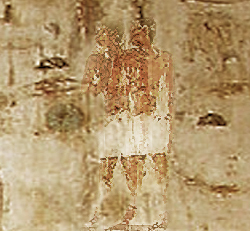 It is an acknowledged fact, for
instance that
the
majority of men in both ancient Rome and Greece at least
occasionally engaged
in homosexual activity, with a fair number of consummated
marriages in these
civilisations being homosexual. Long before any pejorative
labels
were
invented in the modern era - persecution of homosexuality has a
fairly recent
history - homosexuality was not just tolerated, but considered
natural,
accepted as normal and even celebrated in the arts, and cultural
spheres, or
deemed honourable (as with the Samurai). For the societies of
antiquity gender
did not feature as the preeminent or some
‘preordained’
determining factor of the ‘appropriateness’ of love
or
matrimonial
relationships.
It is an acknowledged fact, for
instance that
the
majority of men in both ancient Rome and Greece at least
occasionally engaged
in homosexual activity, with a fair number of consummated
marriages in these
civilisations being homosexual. Long before any pejorative
labels
were
invented in the modern era - persecution of homosexuality has a
fairly recent
history - homosexuality was not just tolerated, but considered
natural,
accepted as normal and even celebrated in the arts, and cultural
spheres, or
deemed honourable (as with the Samurai). For the societies of
antiquity gender
did not feature as the preeminent or some
‘preordained’
determining factor of the ‘appropriateness’ of love
or
matrimonial
relationships.